


This article cites a press release from the Institute of Medical Science, The University of Tokyo.
Study uncovers the virological characteristics of a novel group of coronaviruses – closely related to SARS-CoV-2 – circulating in horseshoe bats in Thailand.
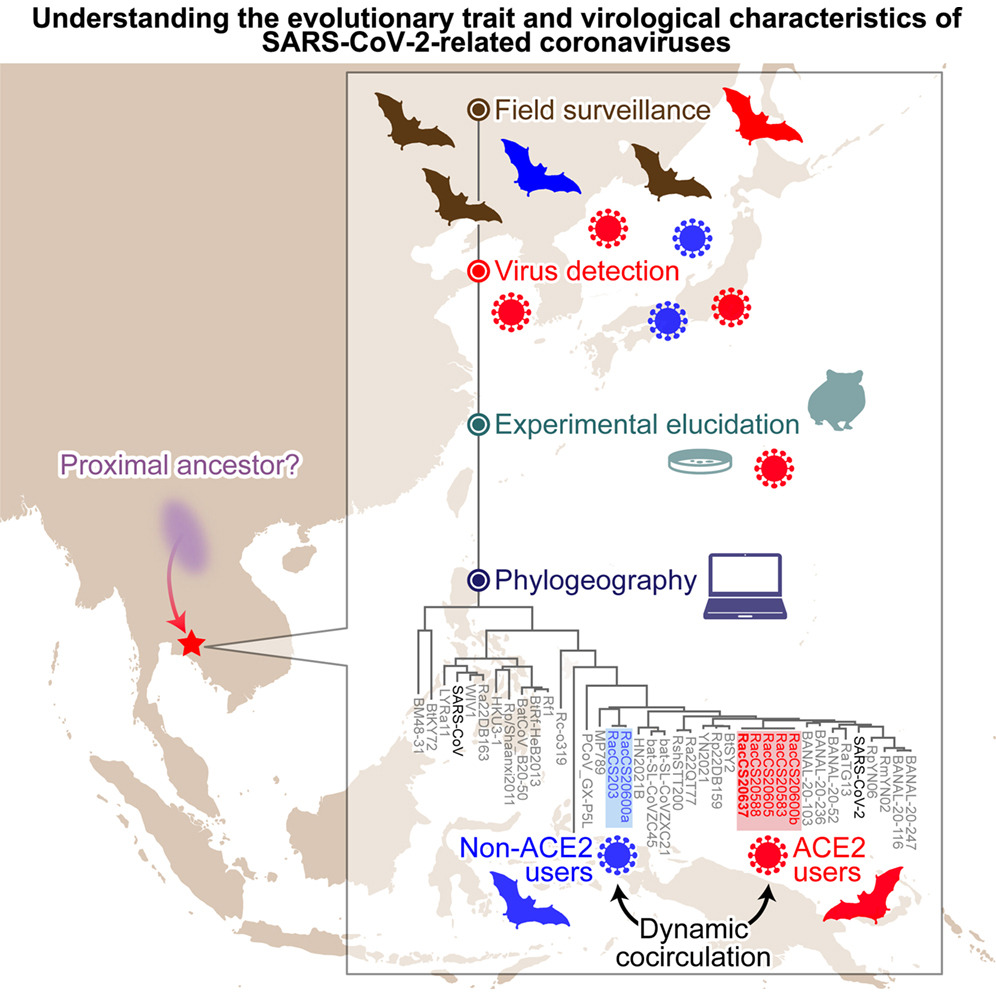
Horseshoe bats are the main host of coronaviruses related to SARS-CoV-2, the causative agent of the recent COVID-19 pandemic. Yet, the diversity and properties of bat SARS-CoV-2-related viruses remain unexplored, especially in Southeast Asia that harbors the largest number of horseshoe bat species. In a collaborative effort between the Institute of Medical Science, The University of Tokyo in Japan and Chulalongkorn University in Thailand, researchers discover a new group of these viruses sampled in acuminate horseshoe bats (Rhinolophus acuminatus) and compare their virological characteristics to these of SARS-CoV-2. The study reveals important insights into the features that make these viruses capable of jumping into humans by combining wildlife virus surveillance, laboratory molecular virology experiments and computational methods to trace the geographic movement and history of the viruses.
>> Read more. (The Institute of Medical Science, The University of Tokyo)